Water Extraction and Structural Drying
Request an estimate today
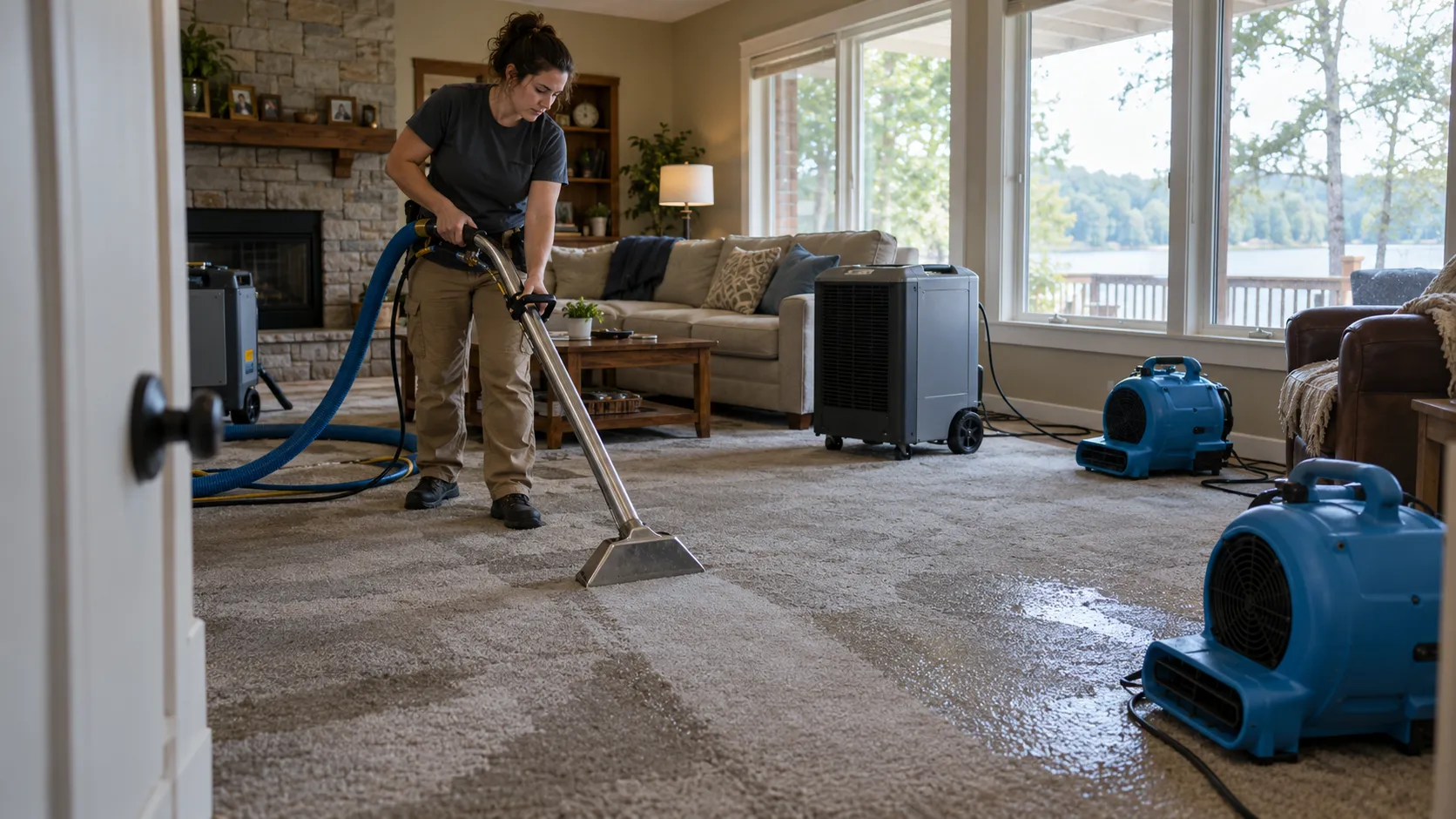
Water extraction removes the bulk water from floors, carpet and low areas. Structural drying handles what you cannot see: moisture held in subfloors, wall cavities, framing and insulation. Skip the second step and a dry-looking room can stay damp inside.
Henceregime Restoration is a referral service. We take your details, match the job to an independent provider in the Inland Empire, and hand it off. The provider does the work, measures moisture, and can help document the damage. Request an estimate with no obligation.
Standing water: what to do first
If water is still coming in, stop it. Shut the fixture valve or the main supply. If water is near outlets, appliances or a panel, stay out and turn off power only if you can reach the breaker safely and stay dry.
Then get a provider lined up. Many providers can respond quickly, but availability varies.
Two jobs, one goal
Water extraction is bulk removal. Pumps and wet vacuums pull standing water off floors and out of carpet and pad.
Structural drying is what follows. Air movers and dehumidifiers pull moisture out of materials that soaked it up. Both steps are done by the provider, not by Henceregime Restoration.
Why speed matters for the structure
Wet drywall, wood and insulation start to break down quickly. Swelling, warping, stains and mold growth can follow. The sooner the water is out, the less material has to be torn out later.
That is how you protect the home and its resale value. A clean, documented dry-out is easier to explain to a buyer than a patched-up mystery stain.
How water extraction works
The provider uses truck-mounted or portable pumps for deeper water. Wet vacuums handle the thinner layers. Carpet may be lifted and the pad removed, since pad holds water and is often cheaper to replace than to save.
The provider will also look at where the water went. It rarely stays where it landed.
How structural drying works
Drying is controlled, not just a fan in the corner. The provider sets air movers to push dry air across wet surfaces. Dehumidifiers pull the moisture out of the air so it does not settle somewhere else.
Moisture meters track progress. Readings are taken at the start and again on later visits, so you can see numbers drop.
Check behind finishes
Paint and flooring hide a lot. Water travels under baseboards, into wall bottoms and beneath tile or laminate. Providers often use moisture meters and thermal cameras to find wet spots without opening everything.
Sometimes a small hole at the base of a wall is needed to dry the cavity. That is normal and cheaper than rebuilding a wall later.
Older homes need a slower look
Older bungalows and early tract homes often have plaster, solid wood subfloors, old insulation and layers of past repairs. Some of those materials dry slowly. Others should not be wetted further or disturbed carelessly.
Tell the provider what you know about the home's age and any earlier leaks. Hidden surprises are more common in older houses, and a careful provider plans for them.
Slabs and raised foundations
Many stucco ranch homes sit on a slab or a raised foundation. Slab homes can trap moisture under flooring. Raised foundations have crawl spaces where water can linger out of sight.
Ask whether the provider will check under-floor areas as part of the job.
How long does drying take?
Typical drying runs a few days, often three to five, but it depends on the materials, the amount of water and the humidity. Dense materials such as hardwood and framing take longer. The provider should explain readings and a target before equipment leaves.
What you can do while you wait
- Move small furniture, rugs and electronics out of the wet area.
- Lift furniture legs onto blocks or foil if it cannot move.
- Take photos and short video of the damage before anything is touched.
- Keep receipts and notes for any claim.
- Open interior doors to help air move, unless the provider says otherwise.
Some policies may cover sudden damage, so check your policy. Providers can often help document damage for a claim.
What to avoid
Do not run a household fan and call it done. Do not use a standard vacuum on water. Do not cover wet floors with new flooring. Sealing in moisture is how small jobs become mold jobs.
Questions to ask the provider
- How will you measure moisture, and how often?
- What is the drying target before equipment is removed?
- Will you check wall cavities and under-floor areas?
- Can you provide readings and photos for my records?
- Is the quote in writing, and what could change it?
How Henceregime Restoration fits in
Think of Henceregime Restoration as the dispatcher. You share the details. We match the job to an independent provider in the Inland Empire. The provider sets the scope, price and schedule. Dry it right, and the house keeps its value.
What's Included
Bulk water removal
Pumps and wet vacuums clear standing water from floors, carpet and low areas of the home.
Moisture mapping
Meters and cameras locate hidden wet spots behind walls and under floors.
Controlled structural drying
Air movers and dehumidifiers pull moisture out of framing, subfloors and wall cavities.
Progress readings and notes
Moisture readings are logged on visits, which helps show the job was finished and documented.
Typical water extraction and drying costs
These are typical U.S. ranges. Real prices vary by water amount, materials, home size and access. Get a written quote from the provider before work starts.
| Item | Typical range | Notes |
|---|---|---|
| Water extraction, small area | $300 – $1,000 | One room, shallow water |
| Water extraction, multiple rooms | $1,000 – $4,000 | More water, more time and equipment |
| Structural drying equipment | $800 – $3,500 | Usually priced per day or per unit |
| Moisture inspection and mapping | $200 – $600 | Often folded into the job price |
| Carpet pad removal | $0.50 – $1.50 per sq ft | Pad is often replaced, not saved |
| Wall cavity or subfloor drying access | $500 – $2,500 | Older homes can run higher |
How It Works
Share the details
Tell us where the water came from, how much there is and the age of the home.
Job matched
Henceregime Restoration passes the request to an independent local provider in the Inland Empire.
Provider reviews
The provider checks the damage, explains the plan and gives a written quote.
Extract, then dry
The provider removes the water, sets drying equipment and tracks moisture readings.
Why Call Henceregime Restoration
Protects the home's value
Proper drying and records show a buyer the damage was handled correctly.
Independent providers
Providers in our network do the work, set scope and give the quote.
Older-home awareness
Aging materials and past repairs need a careful plan, and we pass those details along.
Clear next step
Send the details, request an estimate, and decide with no obligation.
Other Services
Need water extraction and structural drying in Riverside?
Describe the damage and request an estimate. A local provider in our network follows up with next steps. No obligation to accept.
Water Extraction and Structural Drying FAQ
- What is the difference between water extraction and structural drying?
- Extraction removes standing and bulk water using pumps and vacuums. Structural drying comes after and pulls moisture out of walls, subfloors and framing with air movers and dehumidifiers. Most jobs need both.
- How long does structural drying take?
- Often about three to five days, but it varies with the amount of water, the materials and the humidity. The provider checks moisture readings and removes equipment once the target is reached.
- Can I just use fans and a dehumidifier myself?
- For a tiny spill, maybe. For anything larger, household equipment rarely dries hidden moisture in walls and floors, and trapped dampness can lead to mold. A provider can measure and confirm the structure is dry.
Reach a local provider
Describe the damage and request an estimate. A local provider in our network follows up with next steps. No obligation to accept.
No obligation