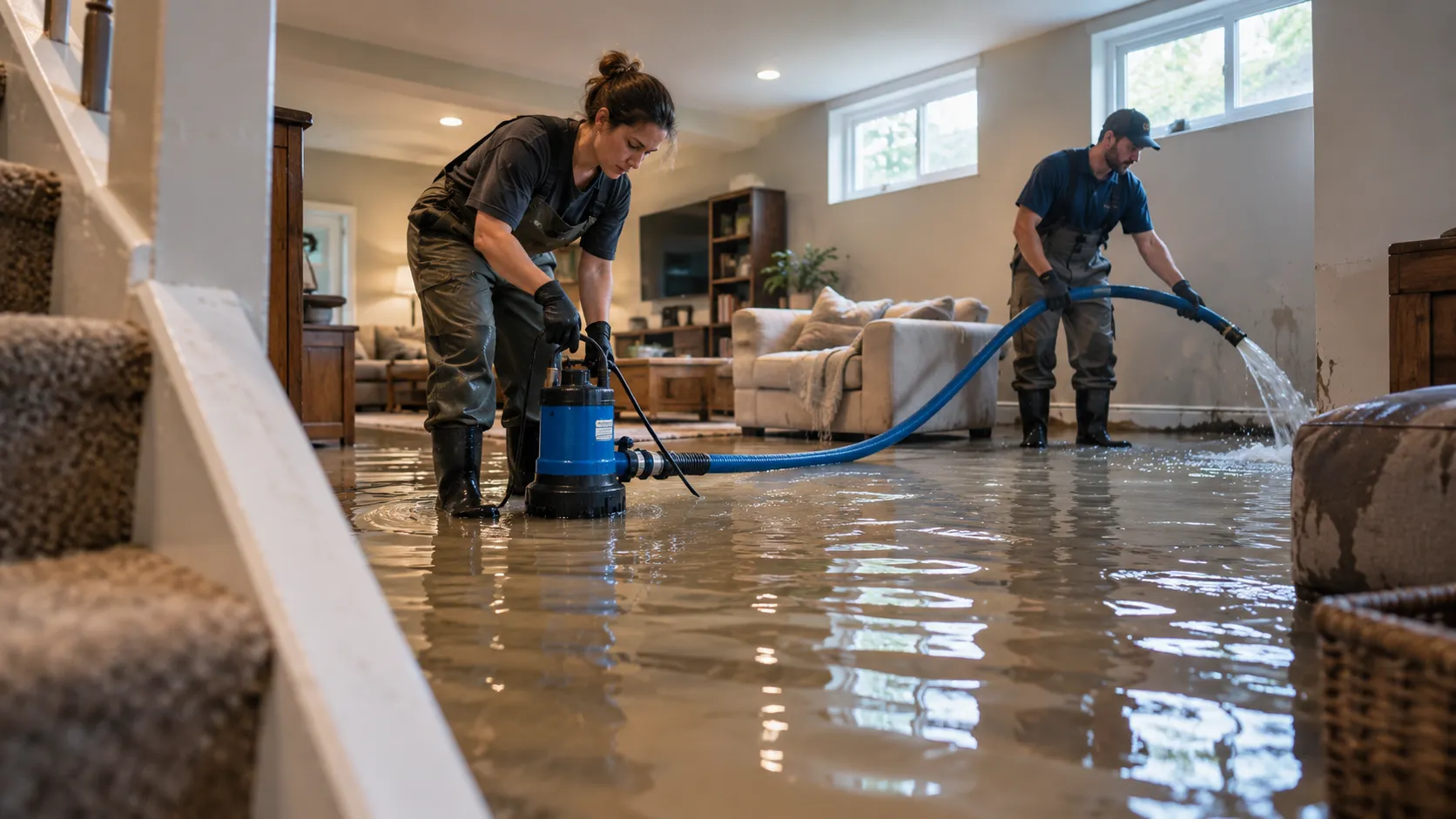
Flooded Basement Cleanup for Riverside Homeowners
Request an estimate for your basement
A flooded basement can come from a winter storm, a failed sump pump, a burst pipe or a backed-up drain. The water is only the first problem. It also soaks into walls, framing, flooring and stored items, and it can leave behind bacteria and mold if the space stays damp.
Henceregime Restoration is a referral service. We take your details, match the job to an independent provider in our network, and hand it off. The provider does the pumping, cleanup, drying and documenting. Doing it right protects the house, its condition and its resale value. Request an estimate with no obligation.
Flooded Basement? Start Here
Safety comes first. Cleanup comes second. Work through these steps in order before anyone picks up a mop.
Treat the Electrical System as Live
If water touches outlets, cords, appliances or the panel, stay out of the room. Do not wade in to check. Ask a licensed electrician or your utility to cut power from a dry spot.
Watch for Hidden Hazards
Floodwater can carry sewage, chemicals and debris. Stairs get slick and the floor can hide sharp objects. If you must go down, wear rubber boots and gloves. Keep children and pets upstairs.
Stop the Source If You Safely Can
If a pipe, water heater or washer is leaking, shut off the main water valve. If the cause is rain or groundwater, do not drain the room all at once. Saturated soil pushes on foundation walls, and a provider can advise on a safe pumping pace.
Find Out Where the Water Came From
The source decides the cleanup plan. Providers sort water into three broad types.
- Clean water: a supply line, a tank or a leaking appliance.
- Gray water: washing machine or dishwasher discharge, or a sump overflow.
- Black water: sewer backup or rising groundwater and storm runoff.
Black water changes everything. Porous materials such as carpet, pad and drywall that touched it usually have to be removed. Tell the provider what you saw, when it started and how high the water got. Photos help.
Why Basement Floods Need Fast Action
Concrete and block hold moisture longer than most people expect. Drywall and wood framing wick it upward. Mold can begin to grow within a few days in damp, closed-in spaces. Many providers can respond quickly, but availability varies. Request a callback to check provider availability in your area.
After a long dry season, a heavy winter rain can overwhelm drains and sump systems that have sat idle. Homes with raised foundations or slab-on-grade lower levels can take on water too, often through low spots and utility openings.
What Flooded Basement Cleanup Includes
Scope varies by job, but most providers follow a similar sequence.
- Pump out standing water and extract what remains in floors and carpet.
- Remove wet, damaged or contaminated materials that cannot be dried.
- Clean and sanitize surfaces, especially after gray or black water.
- Set up air movers and dehumidifiers to dry the structure.
- Measure moisture in walls and floors until readings return to normal.
- Write up the work and the damage for your records.
Dry it right, and the rebuild starts on solid ground.
Older Homes: Check Behind Finishes
Older bungalows and mid-century tract homes bring their own surprises. Plaster, old paneling, early drywall and past patch jobs can hide wet spots. Original wiring, aging pipes and older foundation walls may also need a closer look. Ask the provider to check behind finishes with moisture meters instead of trusting what looks dry. Some older materials may also need special handling, so mention the age of your house when you ask for an estimate.
Finished vs. Unfinished Basements
An unfinished basement is usually quicker to clean. Bare concrete and open framing can be cleaned, sanitized and dried in place.
A finished basement is more complex. Carpet, pad, baseboards, insulation and drywall can trap water behind the surface. Providers often cut away the lower part of a wall to dry the cavity. That is a controlled step that saves the rest of the wall.
After the Cleanup
Drying Checks and Documentation
A room that feels dry may not be. Ask for moisture readings at the start and at the end of drying. Written records and photos help if you file an insurance claim. Some policies may cover sudden damage, so check your policy. Providers can often help document damage for a claim.
Repairs and Rebuild
Once the structure is dry, you can repair or replace drywall, flooring and trim. Cleanup and rebuild are often separate jobs, and sometimes separate providers. Full, documented drying protects the home and supports its value if you sell later.
Your Belongings
Move dry items to a higher, ventilated area. Sort wet items into three groups: keep, clean, and discard. Hard goods such as metal, glass and plastic can often be cleaned. Upholstery, mattresses and cardboard that sat in floodwater are usually hard to save. Photograph everything before you throw it out. Some providers also offer content cleaning, so ask.
Questions to Ask the Provider
- Is the provider licensed and insured where required locally?
- What type of water is this, and how does that change the plan?
- Which materials will come out, and why?
- How will drying be measured and recorded?
- What does the written estimate include, and what could change it?
- Who handles the rebuild?
Your Next Step
Share the basics: what happened, how deep the water got and how old the house is. Henceregime Restoration passes the details to an independent provider in our network. You review the estimate with no obligation.
What's Included
Water Removal and Extraction
Providers pump out standing water, then pull moisture from floors, carpet and low walls.
Damaged Material Removal
Soaked drywall, pad and insulation that cannot be dried are cut out and hauled away.
Cleaning and Sanitizing
Floors, walls and framing are cleaned, with extra steps after gray or black water.
Drying Checks
Moisture readings show whether the structure is truly dry before any rebuild starts.
Typical Flooded Basement Cleanup Costs
Costs vary by water depth, water type, square footage and finishes. These are typical U.S. ranges only. Always ask for a written quote before work begins.
| Item | Typical range | Notes |
|---|---|---|
| Standing water pump-out | $300 – $1,200 | Depends on depth and volume |
| Water extraction from floors | $0.70 – $2.25 per sq ft | Higher for carpet and pad |
| Drywall and insulation removal | $1 – $4 per sq ft | Cut-outs often go above the waterline |
| Cleaning and sanitizing | $0.50 – $3 per sq ft | Higher after gray or black water |
| Equipment drying (3–5 days) | $1,000 – $3,500 | Air movers and dehumidifiers |
| Mold testing or treatment | $500 – $6,000 | Only needed if growth is found |
How It Works
Share the Details
Tell us what happened, how deep the water got and roughly how old the house is.
We Match a Provider
Henceregime Restoration routes your request to an independent local provider that fits the job.
Review the Estimate
The provider outlines scope and price in writing so you can decide.
The Provider Does the Work
The provider handles pumping, cleanup and drying, then documents the results.
Why Call Henceregime Restoration
Protect the Home
Thorough drying keeps hidden moisture from damaging framing, floors and finishes over time.
Independent Providers
Your job goes to a local provider in our network who does the work.
Older Homes
Matching matters when plaster, old pipes and past repairs can hide wet spots.
Clear Estimates
Request an estimate, compare it in writing and decide with no obligation.
Other Services
Need flooded basement cleanup in Riverside?
Describe the damage and request an estimate. A local provider in our network follows up with next steps. No obligation to accept.
Flooded Basement Cleanup FAQ
- How long does it take to clean up a flooded basement?
- It depends on water depth, water type and basement size. Pumping and cleanup can take a day or two. Structural drying often takes three to five days or more. The provider should give you a timeline in the written estimate after seeing the space.
- Can I clean a flooded basement myself?
- Small clean-water leaks can be handled by a homeowner. Deep water, sewage, electrical risk or wet walls call for a provider. Hidden moisture in walls and concrete is hard to detect without proper meters.
- Does homeowners insurance cover a flooded basement?
- It depends on the cause. Some policies may cover sudden damage, but flood and groundwater often need separate coverage. Check your policy, and ask the provider to help document the damage for a claim.
Reach a local provider
Describe the damage and request an estimate. A local provider in our network follows up with next steps. No obligation to accept.
No obligation