Straight answers before you hire anyone
Water Damage Questions Homeowners Ask
Request an estimate today
Questions
Answers to common questions
- How do I choose a water damage restoration provider?
- Ask four things. Is the provider licensed where required and insured? Do they use moisture meters and dry to a measured target? Will they give a written scope and quote? Can they document the damage with photos and readings? Avoid anyone who skips testing or pushes you to sign on the spot. Henceregime Restoration matches you with independent providers, but you choose who does the work.
- Does Henceregime Restoration do the restoration work?
- No. Henceregime Restoration is a referral service. It works like a dispatcher: you share the details of the job, we match it to an independent local provider in our network, and the request is handed off. The provider does the inspection, extraction, drying and repairs. The provider sets its own pricing, schedule and terms, so review them before you agree to anything.
- Will my homeowners insurance cover water damage?
- It depends on your policy and the cause. Some policies may cover sudden damage, such as a burst pipe, while slow leaks and flooding from outside often need separate coverage. Check your policy or ask your insurer before work starts. Providers can often help document damage with photos, moisture readings and written scopes, which may support a claim. Keep every receipt.
- What should I do while I wait for a provider?
- Stay safe first. If water is near outlets or appliances, shut off power at the panel only if you can reach it dry. Stop the source if you can, such as a supply valve. Move small valuables and furniture out of the wet area. Take photos and video of everything. Do not use a household vacuum on standing water.
- What happens during water extraction and structural drying?
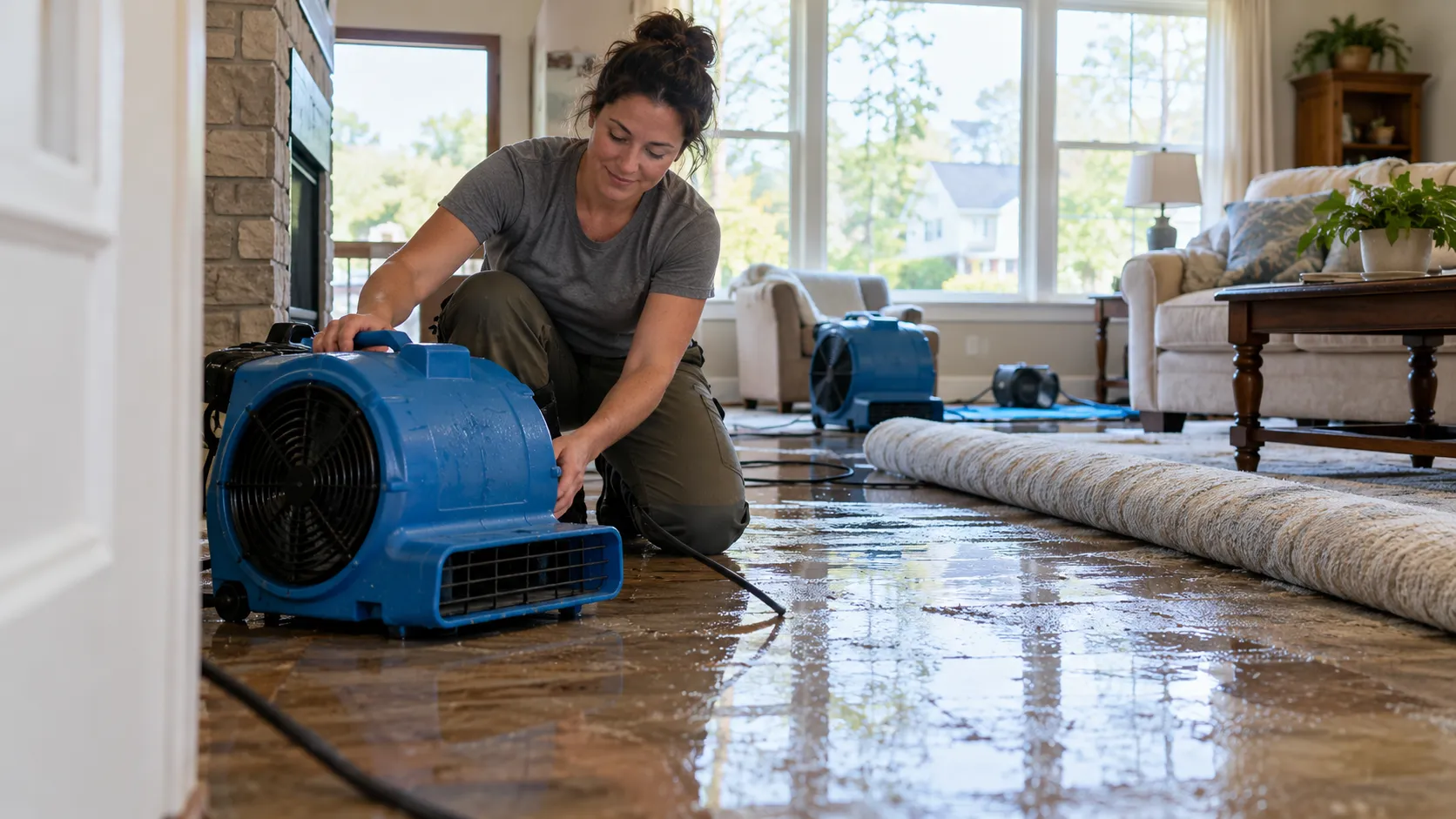
- First the provider finds the water source and checks moisture levels. Then pumps or vacuums remove standing water. Next come air movers and dehumidifiers to dry floors, walls and framing. Readings are taken over several days to confirm the structure is dry. Wet materials that cannot dry, like soaked insulation or carpet padding, may be removed. Dry it right, then rebuild.
- Can I dry out the water damage myself?
- Small spills on a hard floor, caught early, are often fine to handle yourself. Bigger jobs are different. Water hides in walls, under flooring and in insulation, and fans from a store rarely reach it. Missed moisture can lead to mold and rot. If water spread past one room or sat more than a day, get a provider to check.
- Do older homes need special care after water damage?
- Often, yes. Older bungalows and tract homes may have plaster, aging pipes, past patch repairs or materials that need extra testing before demolition. Water can travel behind finishes and into places nobody has opened for decades. Tell the provider your home's age up front. Check behind finishes before anything is closed up or repainted.
- How much does water damage restoration cost?
- Typical U.S. jobs range from a few hundred dollars for a small, contained spill to many thousands for large or multi-room damage. Cost depends on the water type, area affected, materials and drying time. Get a written quote that lists the scope, equipment and any rebuild work. Compare it with a second one if the number surprises you.
Contact
Reach a local provider
Describe the damage and request an estimate. A local provider in our network follows up with next steps. No obligation to accept.
No obligation